


Kambo Ceremony
An intense encounter with the body, held with preparation, screening, and care.
Kambo is an Amazonian ceremonial practice using the secretion of the Phyllomedusa bicolor frog.
The experience can be physically intense. And what happens around that intensity can be remarkably varied.
In our own experiences and in serving others, we have witnessed people emerge feeling lighter, clearer, energized, grounded, emotionally open, deeply tired, quiet, tender, or simply different. Some describe a sense of reset or renewed vitality. Others experience something much subtler.
We hold these as experiences people report, not outcomes Kambo promises.
What your experience will be, and what meaning it may carry for you, cannot be known in advance.

An Ancestral
Ceremonial Practice
Kambo comes from the secretion of Phyllomedusa bicolor, a tree frog native to the Amazon basin. For generations, Indigenous communities of the upper Amazon have worked with Kambo as part of their cultural, ecological, and spiritual lives.
Different peoples carry distinct traditions, yet Kambo is understood as more than a substance. It belongs to a living relationship between people, forest, animal, and community. The story of Kampu speaks of Kambo as a gift received in service of the tribe.
Our work begins with respect for this lineage. We practice in a modern context while remembering that Kambo did not begin with us. We remain students of a tradition carefully stewarded across generations.

The Body Remembers
How to Move
The body is always moving toward balance. Regulating, repairing, eliminating, and responding to everything life asks it to carry.
Kambo creates a brief and intense physiological response. Heat rises. Circulation changes. The stomach and intestines activate. Sweating, nausea, and purging may follow.
Within traditional and contemporary practice, this movement is understood as cleansing: an opportunity for what has accumulated or become stagnant to begin moving again.
Many people emerge feeling lighter, clearer, and more available to life.
The secretion of Phyllomedusa bicolor contains a complex mixture of bioactive peptides. Kambo’s effects do not come from one active ingredient, but from many compounds acting at once.
Peptides are short chains of amino acids that carry messages through living systems. Several found in Kambo resemble signaling molecules already used by the human body, allowing them to bind with receptors involved in circulation, smooth muscle, digestion, pain, stress response, and other essential processes.
Scientists have studied individual peptides including dermorphin, deltorphin, phyllokinin, phyllomedusin, sauvagine, and adenoregulin. Most research, however, has examined isolated peptides in laboratories or animals rather than the complete Kambo secretion in human ceremonies.
Science is still discovering how these compounds work together. We understand some of the individual notes. The whole symphony remains less mapped.

A Symphony of Peptides


What Happens During a Kambo Ceremony?
Every Kambo ceremony begins before Kambo is applied.
We begin with a careful conversation about your health history, medications, intentions, and possible contraindications. Sometimes Kambo is appropriate. Sometimes another path is wiser.
On the day of ceremony, we review the process and prepare the space together. Small superficial points are made on the outer layer of the skin, and Kambo is applied. Within minutes, the body begins responding. This may include heat, changes in heart rate and blood pressure, facial swelling, sweating, nausea, vomiting, or bowel movements. The active response is generally brief.
We remain with you and attentive throughout. Some people purge intensely. Others very little. The intensity of the purge is not a measure of the depth or value of the experience.
As the body settles, the ceremony moves into rest, listening, and integration. What emerges may be physical, emotional, or surprisingly quiet.


The Ecology of Ceremony
The peptides matter. So do the conditions in which they are received.
Preparation, environment, intention, relationship, and integration all shape the experience. Together, they create an ecology of care around the body’s intense physiological response.
Screening, informed consent, appropriate dosing, attentive presence, and thoughtful integration are not details surrounding the ceremony. They are part of the ceremony.
Our role is not to decide what your body should do. It is to create conditions in which its intelligence can be met with safety, presence, and respect.


Beyond the Body
Kambo works directly through the body. Yet what begins moving may appear somewhere unexpected.
A partnership finds a different conversation. An entrenched inner conflict becomes available to meet in a new way. A financial situation reveals a next step. Something left unfinished begins asking for attention again.
These movements cannot be predicted or promised. Sometimes their connection to the ceremony is immediately clear. Sometimes it is recognized only later, if at all.
The release is not always the insight itself. Sometimes it is the space that allows something previously stuck to be met, expressed, or lived differently.
Integration begins by noticing what moves.

Is Kambo Right for You?
Kambo can be intense. It deserves discernment.
Certain health conditions, medications, and life circumstances can make Kambo unsafe or inappropriate. Before scheduling a ceremony, we begin with a thorough conversation about your health, medications, intentions, and what is happening in your life.
Sometimes Kambo is appropriate. Sometimes another path is wiser. The purpose of this conversation is not to persuade you, but to arrive at a clear and informed decision together.


Your Kambo Practitioner
Kambo is not something I administer from a distance. I meet it as a practitioner, a student, and someone who continues to work with it in my own life.
My approach is careful, relational, and responsive to the person in front of me. I screen thoroughly, work with appropriate dosing, remain attentive throughout the physiological response, and make room for whatever the experience may reveal without imposing a meaning upon it.
For me, intensity is not an accomplishment. A ceremony is not measured by how much someone purges, but by the quality of preparation, discernment, presence, and integration surrounding it.
I bring years of experience holding ceremonial and transformational spaces, together with a devotion to meeting each person honestly, responsibly, and without pretending to know what their body or life should do next.

Omer Saar
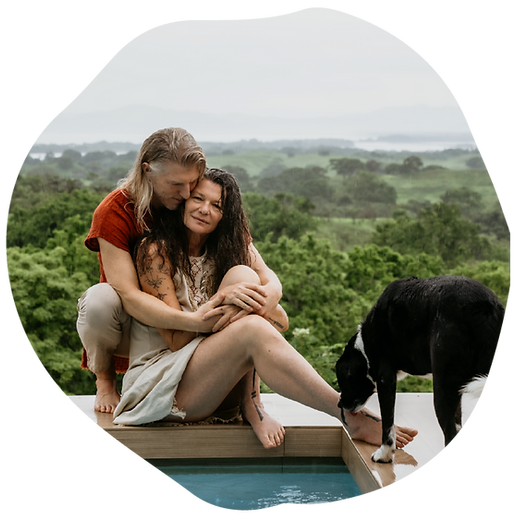
I’m Omer Saar. I was trained and initiated in Kambo practice by my mentor, Joseph, whose mentor is Taita Julio César Chicunque of the Kamëntšá people. I remain in relationship with Joseph and consult with him as questions arise in my practice.
Since completing my training in November 2025, I have facilitated approximately 50 Kambo ceremonies. My practice includes thorough intake and contraindication screening, informed consent, careful dosing, attentive observation throughout the physiological response, and integration afterward.
My approach is careful, relational, and responsive to the person in front of me. I do not treat intensity or purging as an accomplishment. Kambo can bring forward more than a physical response, and my broader experience holding ceremonial and transformational spaces helps me remain present with emotional, relational, or symbolic material without deciding in advance what it means.
I meet this work as both practitioner and student, with respect for its lineage, humility before what remains unknown, and responsibility for the person I am serving.